
About the Fellowship
The William H. Gates Sr. Fellowship supports a new generation of Alzheimer's and related dementias (ADRD) researchers with bold, novel approaches. The two-year program provides a $100,000 award, mentoring, and network opportunities to researchers worldwide pursuing new hypotheses or analytical approaches in Alzheimer’s and related dementias research.
Named after William H. Gates Sr., this Fellowship honors his legacy of advocacy and philanthropy. We are inspired by the actions of Mr. Gates Sr., who passed away from Alzheimer’s disease in 2020, and we hope he can be an inspiration to the global research community.
2025 Cohort II Fellows
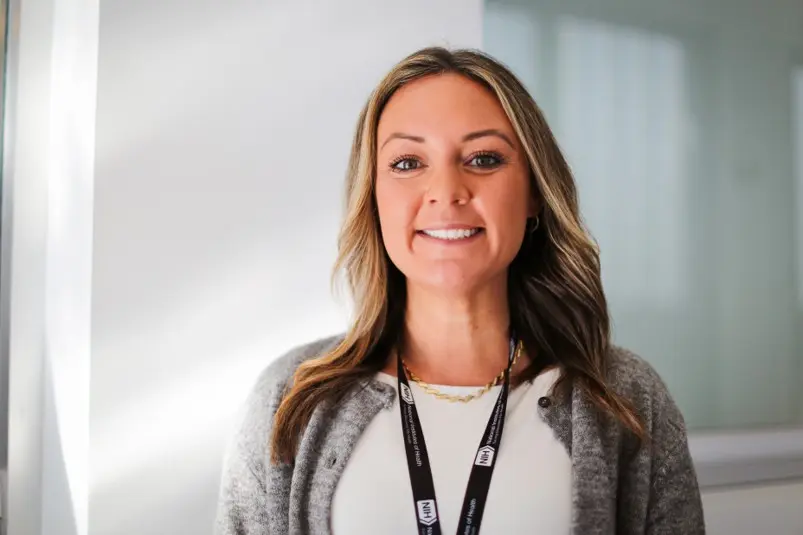
Kimberley Billingsley, Ph.D. | Cohort II Fellow
Professional Background:
Dr. Kimberley Billingsley leads the Applied Neurogenomics Group at the NIH Center for Alzheimer's Disease and Related Dementias (CARD). Her research examines how complex genetic variations, including structural variants and tandem repeats, and epigenetic modifications influence the development and progression of neurodegenerative diseases, including Alzheimer's and Parkinson's. She earned her Ph.D. in Pharmacology from the University of Liverpool, UK.
Research Focus:
Long-read sequencing, structural variants, tandem repeats, and epigenetics in neurodegeneration.
Proposed Research:
Dr. Billingsley will use high-resolution methylation data from long-read sequencing to develop predictive models for ADRD. Her framework will identify epigenetic signatures associated with neurodegeneration across disease stages. The goal is to improve risk stratification, support early detection, and establish more accurate biomarkers for early intervention.

Liz Yuanxi Lee, Ph.D. | Cohort II Fellow
Professional Background:
Dr. Liz Y. Lee is a Senior Postdoctoral Fellow in the Department of Psychology at the University of Cambridge, UK. Her research focuses on computational models that integrate genetic, neuroimaging, and behavioral data to identify neurogenetic phenotypes related to brain plasticity and mental health. She holds a Master's in Engineering from Tsinghua University, China, and a Ph.D. in Cognitive Psychology from Beijing Normal University, China.
Research Focus:
Early prediction of cognitive decline with explainable artificial intelligence (XAI).
Proposed Research:
Dr. Lee will develop AI-guided tools for early ADRD detection using cost-effective, non-invasive multimodal data. The project focuses on cognitive decline prediction in healthy individuals and patients with mild cognitive impairment (MCI). It aims to improve model generalizability across populations, strengthen early intervention strategies, and reduce bias in ADRD research and care.

Selena Wang, Ph.D. | Cohort II Fellow
Professional Background:
Dr. Selena Wang is an Assistant Professor of Biostatistics and Health Data Science at Indiana University School of Medicine. Her research develops scalable statistical and computational approaches for high-dimensional biomedical data. She specializes in network science, neuroimaging, data integration, and statistical machine learning. Her methods include MRI analytic techniques, Bayesian inference, and latent space network models that incorporate biological, psychological, and medical information.
Research Focus:
Network science, brain imaging, Bayesian analysis, and psychometrics.
Proposed Research:
Dr. Wang will advance generative AI technologies to integrate multimodal neuroimaging data and model ADRD progression. The work aims to identify novel biological pathways that predict and delay conversion from mild cognitive impairment to Alzheimer's disease.
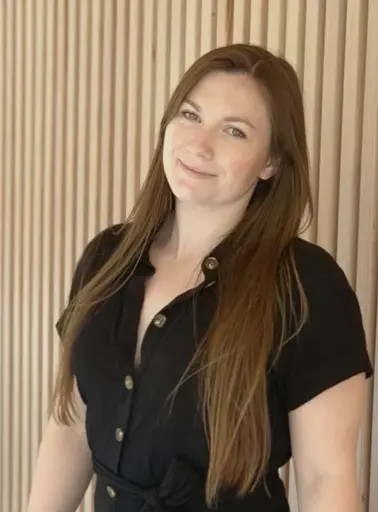
Tavia Evans, Ph.D. | Cohort II Fellow
Professional Background:
Dr. Tavia Evans is a Neuroscientist and Senior Researcher at Radboud UMC in Nijmegen, the Netherlands. She is also a Fellow in Equity in Brain Health at the Global Brain Health Institute (Trinity College Dublin, 2024–2025 cohort). Her work focuses on increasing global diversity within neuroimaging studies of neurodegeneration. She earned her Ph.D. in Clinical Neuroscience from King's College London.
Research Focus:
Image processing, artificial intelligence, and neuroimaging analysis for Alzheimer's disease and aging.
Proposed Research:
Dr. Evans will develop and test neuroimaging methods suited to global populations, including computed tomography and ultra-low-field MRI. The goal is to improve representation in neurodegeneration imaging research and produce methods that support better clinical care worldwide.
2023 Inaugural Cohort Fellows

Geetha Chilla, Ph.D. | Cohort I Fellow
Professional Background:
Dr. Geetha Chilla is a Scientist at A*STAR's Bioinformatics Institute (BII) in Singapore. She investigates neurodevelopment, neuropsychiatry, and neurodegenerative diseases using medical imaging and artificial intelligence. She earned her Ph.D. in Biomedical Engineering from Nanyang Technological University, Singapore.
Research Focus:
Neuro-radiomics, medical imaging and image processing, and artificial intelligence.
Proposed Research:
Dr. Chilla will examine regional brain alterations in subjects stratified by dementia risk using image-based markers from mild and moderate Alzheimer's disease. She will evaluate these markers against changes in cognitive measures and explore whether brain morphometry measures can predict AD and dementia prior to symptom onset.

Hangfan Liu, Ph.D. | Cohort I Fellow
Professional Background:
Dr. Hangfan Liu is an Assistant Professor at the Center for Advanced Imaging Research (CAIR) at the University of Maryland, USA. His research focuses on disease heterogeneity within ADRD and improving disease subtyping. He earned his Ph.D. in Computer Science from Peking University, China.
Research Focus:
Image processing, machine learning, and neuroimaging analysis.
Proposed Research:
Dr. Liu will apply machine learning, image processing, and neuroimaging analysis to advance personalized treatment strategies for ADRD. The work includes three phases: signal-adaptive image enhancement, joint feature representation learning, and robust collaborative clustering to characterize ADRD heterogeneity.
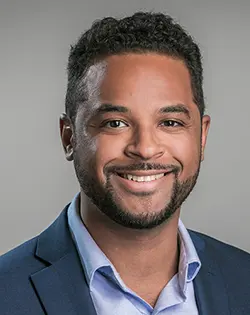
Jermaine Ross, Ph.D. | Cohort I Fellow
Professional Background:
Dr. Jermaine Ross is the CEO and co-founder of Alleo Labs and a board member of the Alzheimer's Association in New York City. His research examines Alzheimer's disease as a syndrome rather than a single disease, analyzing progression across AD subgroups. He earned his Ph.D. in Neuroscience from Brown University, USA.
Research Focus:
Alzheimer's disease, Lewy body dementia, and Parkinson's disease.
Proposed Research:
Dr. Ross will advance biomarker research for early detection and diagnosis by examining the relationship between markers such as insulin-like growth factor-1 and AD progression.

Jiyang Jiang, Ph.D. | Cohort I Fellow
Professional Background:
Dr. Jiyang Jiang is a Research Fellow at the Centre for Healthy Brain Ageing at the University of New South Wales, Australia. His primary interest is applying advanced computational methods to complex questions in medicine. He earned his Ph.D. in Psychiatry from the University of New South Wales, Australia.
Research Focus:
Machine learning, medical imaging, brain and cognitive aging, and dementia.
Proposed Research:
Dr. Jiang will develop prediction models for dementia in low- and middle-income countries (LMICs) using data types accessible to those settings, including demographics, risk factors, cognition, and physical function.
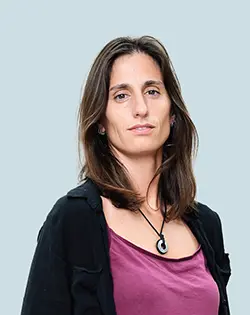
Natalia Vilor-Tejedor Ph.D. | Cohort I Fellow
Professional Background:
Dr. Natalia Vilor-Tejedor leads the genetic neuroepidemiology and biostatistics team at the Barcelona Beta Brain Research Center, Spain. Her research examines genetic (non-modifiable) and environmental (modifiable) factors in the development of neurological disorders and related traits. She earned her Ph.D. in Biomedicine from Pompeu Fabra University, Spain.
Research Focus:
Genetic neuroepidemiology and biostatistical modeling.
Proposed Research:
Dr. Vilor-Tejedor will develop a modeling framework that generates functional predictive omics scores to identify endophenotypes of neurodegeneration at early, preclinical, and advanced disease stages. The goal is to detect specific molecular mechanisms of neurodegenerative disease before symptoms appear.
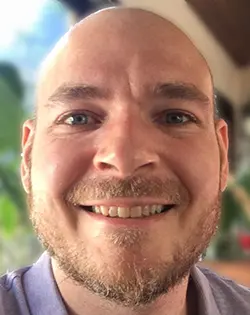
Ricardo D’Oliveira Albanus, Ph.D. | Cohort I Fellow
Professional Background:
Dr. Ricardo D'Oliveira Albanus is a Biologist and Postdoctoral Associate at Washington University School of Medicine in St. Louis, USA. His research examines the relationship between aging and neurodegeneration from a genomics perspective, with a focus on the interface between genetics and gene regulation. He earned his Ph.D. in Bioinformatics from the University of Michigan, USA.
Research Focus:
Functional genomics of Alzheimer's disease and aging.
Proposed Research:
Dr. Albanus will characterize the molecular differences between healthy aging and Alzheimer's disease using human brain tissues across a broad spectrum of ages and neuropathological states, including samples from cognitively healthy centenarians.
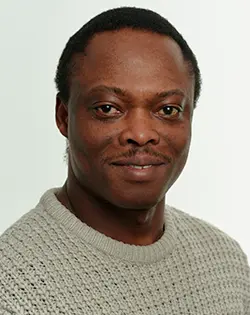
Sam Danso, Ph.D. | Cohort I Fellow
Professional Background:
Dr. Sam Danso is a Senior Lecturer in Computer Science at the University of Sunderland, UK. He also serves as a Principal for the Ghana Prevent Programme, a project building a cohort of underrepresented populations for neurodegenerative disease research. He earned his Ph.D. in Artificial Intelligence from the University of Leeds, UK.
Research Focus:
Applied artificial intelligence and data science, with a focus on explainable artificial intelligence (XAI) for brain health.
Proposed Research:
Dr. Danso will develop a deep phenotype dataset combining data from heterogeneous sources and diverse populations to build a life-course cohort representative of underrepresented groups. He will then develop and test XAI models for early ADRD detection using the harmonized cohort.