
Q&A with Rachel Buckley, Ph.D.
Co-Lead, S|GN Consortium | September 2026
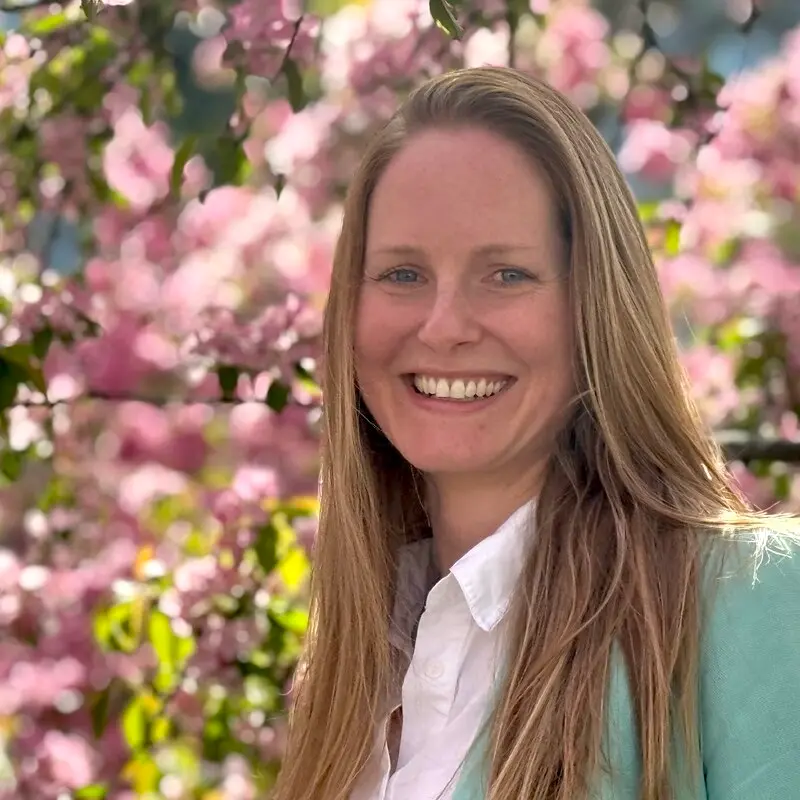
Professor Buckley is an Associate Professor at Mass General Research Institute and Harvard Medical School and Co-Lead of the Sex & Gender in Neurodegeneration (S|GN) Consortium
The S|GN consortium is bringing together partners from around the world to build a harmonized dataset to better understand how dementia differs in women and men.
As Associate Professor at Mass General Research Institute and Harvard Medical School, she leads research on preclinical Alzheimer’s and sex and gender differences.
Her team recently published new research in JAMA that found blood tests measuring the protein p-tau 217 can predict Alzheimer’s risk two to ten years before symptoms even begin.
Learn more about the Sex & Gender Differences Scientific Driver Project, her research focus and what excites her in the space in the following Q&A.
What drew you to study preclinical Alzheimer’s and sex and gender differences?
I was initially drawn to preclinical Alzheimer’s disease because it became clear that the biology of the disease begins many years before someone develops symptoms. That creates an extraordinary window in which we might ultimately be able to identify risk and intervene before substantial cognitive decline occurs. My interest in sex and gender differences grew from the skepticism I was seeing around me in the biomarker field about whether sex differences truly existed or whether women had a higher prevalence rate purely due to longevity.
Certainly, there is a strong element of longevity to explain some of the findings in the epidemiological literature, but our early work really compelled me to think that there truly are sex biological effects underlying sex differences that we see in AD risk, whether in the accumulation of tau pathology, or when we think about sex differences in cognitive resilience, the influence of APOE4. I became increasingly interested not simply in documenting those differences, but in understanding why they occur and whether that knowledge can ultimately improve prevention and treatment. For me, I’ve been traveling down two roads: (1) reproductive factors and (2) the X chromosome.
Why did you join the S|GN Consortium? What excites you about its approach, and what kinds of questions could it help answer?
I joined S|GN because I strongly believe that we need to continue to investigate sex and gender in AD in a systematic, rigorous and data-harmonized way. We have many intriguing findings, but the evidence is often fragmented across individual cohorts, with different measures and definitions, and individual studies are rarely large enough to tackle these questions alone.
What excites me about S|GN is the opportunity to harmonize large global datasets and bring together researchers with very different expertise to move toward understanding their mechanisms. This could allow us to ask much more ambitious questions, for example, how menopause, hormone exposure (including hormone therapy) and other gender-focused factors influence Alzheimer’s biology; which genetic and biological pathways drive different patterns of vulnerability and resilience; and ultimately whether prevention, diagnosis or treatment should be tailored differently by sex.
How does data sharing advance your research, including your recent paper in JAMA on using blood tests to predict Alzheimer’s risk?
Data sharing has been fundamental to my research model and how I’ve been trained. Our recent JAMA study is a good example: by harmonizing data from six longitudinal cohorts, we were able to study nearly 2,700 cognitively unimpaired older adults and ask how blood p-tau217 relates to the absolute risk of developing cognitive impairment over time. No single cohort could answer that question alone - i.e., we get more information about robustness and replicability across cohorts, different recruitment methods and biomarker platforms.
For me, this is the enormous value of data sharing, open access, and data harmonization. I truly believe in evidence that is reproducible, generalizable and potentially useful for clinical decision-making, while also factoring in the boundaries of the data. That is, where the findings might not hold up, or under what cohort or methodological circumstances.
What gives you hope in the field?
The field is moving so quickly! We’re seeing realistic and achievable benchmarks for detecting the earliest signs of AD and potentially treating the disease in asymptomatic individuals. We now have biomarkers that can detect AD biology through a blood test, treatments that can clear amyloid in symptomatic patients, and increasingly sophisticated ways of identifying who is most likely to progress and who may remain cognitively resilient.
I’m also encouraged that questions that were historically overlooked, including women’s brain health, are becoming central scientific questions (and being targeted more and more for philanthropic and foundation funding). I think the combination of earlier detection, better treatments, and much larger collaborative science gives us a genuine opportunity to change what an Alzheimer’s diagnosis means for the next generation. This is why I believe in S|GN and the future of what we can achieve together!